Cleaning & care
Why switching nic salt strength can affect how your device performs
7 min readLast updated 24 September 2026
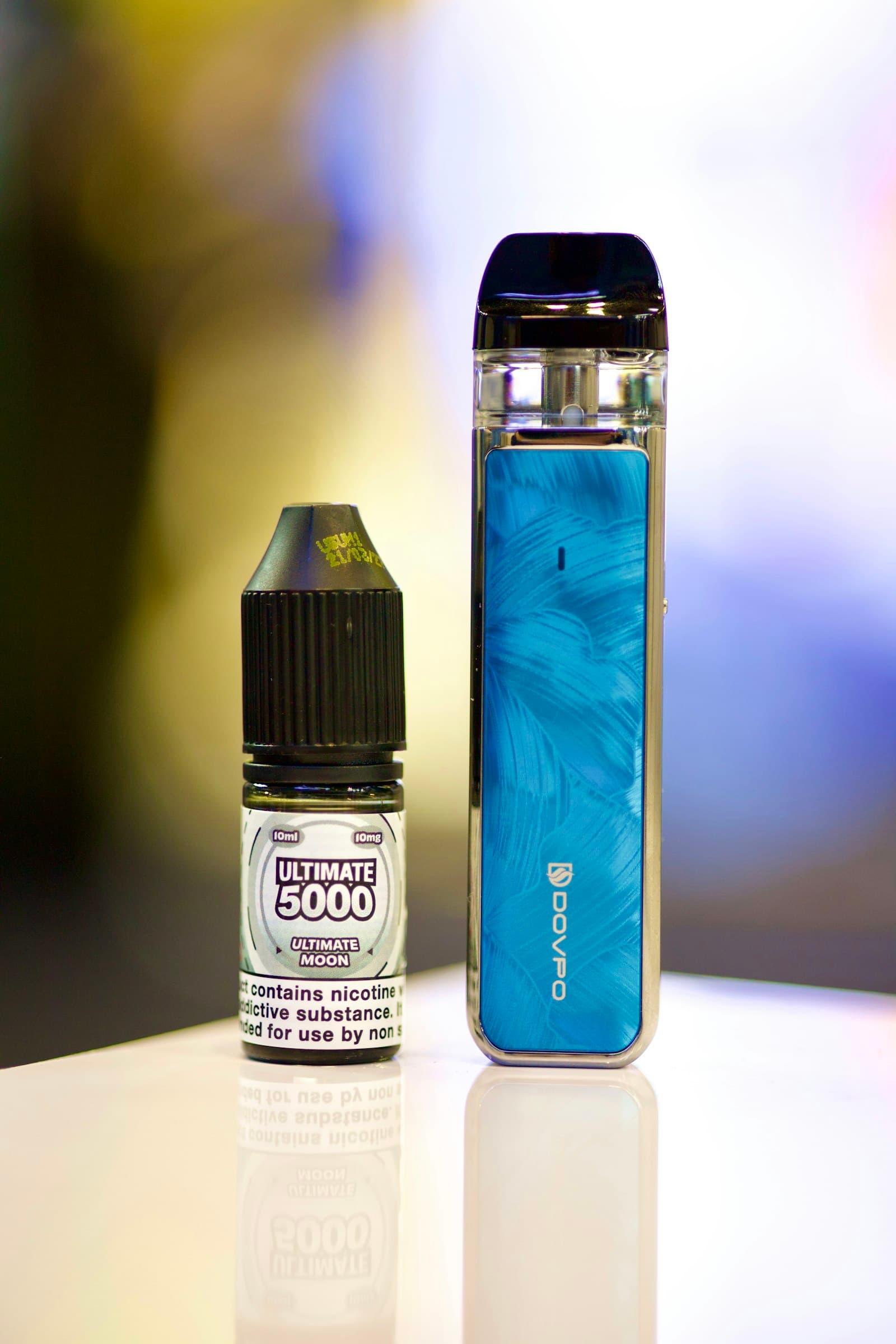
It's a common assumption: if a vape suddenly feels harsher on the throat, or the hit feels stronger than expected, the device must be faulty. Sometimes that's true. But a genuinely common cause is much simpler and has nothing to do with the hardware at all — it's the nicotine salt strength in the bottle you're using.
Nic salt e-liquids are sold in a handful of set strengths, and moving between them, or switching to a new brand at the same strength, can change how a hit feels even though the device itself hasn't changed at all. This guide walks through how strength interacts with your coil and wattage, how to tell that apart from an actual device problem, and a simple way to test which one you're dealing with before you assume anything needs replacing.
Understand what nic salt strength actually changes
Nicotine salt e-liquid is generally described as giving a smoother throat hit at a given strength than the same strength in freebase e-liquid, which is a widely stated formulation characteristic rather than a claim about safety. That smoothness is relative, though, not absolute. A 20mg nic salt is still a strong hit compared with a 5mg one, and if a bottle is stronger than what you're used to, it can feel harsh, sharp, or almost peppery at the back of the throat even coming out of a device that's working exactly as it should.
This matters because harshness and strength are easy to mix up with faults. A scratchy throat hit, a slightly lightheaded feeling, or a hit that feels "too much" can all come from nicotine strength alone, with nothing mechanically wrong with the pod, coil, or battery at all.
Know how strength interacts with coil and wattage
Nic salts are formulated for low-power mouth-to-lung (MTL) pod kits, typically running somewhere in the 5–25W range with a higher-resistance coil. That combination produces a tighter, cooler draw that suits higher nicotine strengths. Push the same e-liquid through a lower-resistance coil or a higher wattage setting, and the extra heat and airflow intensify the throat hit further, sometimes to the point of feeling genuinely unpleasant even at a strength that was comfortable in a different device.
The reverse also happens. A worn coil, one that's coked up with residue or simply old, can produce a hotter, harsher-tasting draw than a fresh one at the exact same wattage and strength, which is one of the reasons it's easy to blame a bottle of e-liquid for something the coil is actually responsible for. Strength, wattage and coil condition all push in the same direction — towards a harsher or stronger-feeling hit — which is exactly why it's worth ruling them out one at a time rather than guessing.
Rule out a genuine device issue before you change strength
Before assuming strength is the answer, check for the usual signs of an actual device fault. A pod or tank that's leaking around the base or mouthpiece can pull excess, poorly vaporised e-liquid into the airflow, which tastes harsh and burnt rather than simply strong. A coil that's well past its usual one-to-four week lifespan will often produce a scorched, unpleasant hit regardless of what's in the tank, and no change of e-liquid will fix that until the coil itself is swapped.
It's worth working through a quick check of the contacts and airflow too, along the lines set out in our guide to cleaning and maintaining a vape kit, since built-up residue around the coil or airflow can produce a rough, harsh-tasting draw that has nothing to do with nicotine strength at all. If cleaning and a fresh coil don't change anything, that's a reasonable point to look at strength next.
Test strength on its own, one variable at a time
The clearest way to isolate strength is to keep everything else the same and only change the bottle. Use the same device, the same coil, and ideally a similar flavour, then try a bottle one step down in strength — from 20mg to 10mg, or 10mg to 5mg — and see whether the harshness or intensity eases off. If it does, that's a strong signal the device was never the issue.
Many vapers who find their usual strength has started feeling too intense, whether that's from a new bottle, a new batch, or simply a change in their own tolerance over time, find it useful to keep a lower-strength option on hand to test against. If you're new to nic salts or want a lower-strength starting point to compare with, Elux vape liquid 5mg is a widely available option at the lower end of the UK strength range. Nicotine needs vary a lot from person to person, so this is about having a reference point to test against, not a suggestion that any one strength is right for you specifically.
Don't overlook flavour and formulation when you switch bottles
Strength is the main variable, but it's rarely the only thing that changes when you pick up a new bottle. Most nic salt e-liquid is a standard 50/50 PG/VG mix, which is the formulation MTL pod kits are designed around, but small differences between brands in exactly how that's blended can still make one bottle feel a little sharper or smoother than another at the same stated strength. Menthol and "ice" flavours in particular can add their own cooling, tingling sensation on the throat that's easy to mistake for extra nicotine strength, when it's actually the cooling agent doing that work.
If you've switched brand and strength at the same time, it's worth changing one variable before the other where possible. Trying the new brand at your usual strength first, or your usual brand at a lower strength, makes it much easier to work out which change is actually behind a harsher hit, rather than guessing at both at once.
Watch for the pattern, not just a single hit
A single harsh puff doesn't tell you much on its own; device temperature, draw speed and even how full the tank is can all affect one individual hit. What's more useful is the pattern across a full tank or pod. If harshness is consistent from the first draw to the last, and disappears when you drop to a lower strength with everything else unchanged, that points to strength. If it instead builds up gradually, comes with a burnt or scorched taste, or is accompanied by leaking or a gurgling sound, that points back towards the device or the coil rather than the e-liquid itself.
Quick reference: strength mismatch or device issue?
| What you notice | Most likely cause |
|---|---|
| Consistently sharp or strong hit, same from first draw to last | Nic salt strength, or wattage set too high for the coil |
| Harshness eases off on a lower-strength bottle, same device and coil | Confirms a strength mismatch, not a fault |
| Burnt or scorched taste that builds up over a tank or pod | Coil reaching the end of its life |
| Harshness alongside leaking or a gurgling sound | Device issue — check the coil seating and seals first |
Nicotine needs vary
The short version
A harsh or overly strong hit is worth checking against nicotine strength before you assume your device has developed a fault. Rule out the obvious device causes first — leaking, a worn or dirty coil, residue around the airflow — and if those check out, try dropping to a lower strength with everything else held constant. If the harshness eases off, you've found your answer without spending anything on a replacement device or coil.